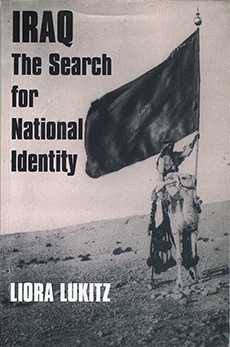
The 1990-1991 crisis in the Middle East and the disturbances that followed in Iraq’s Kurdish and Shi'i areas have starkly exposed deep-seated divisions in the Iraqi population. Iraq has essentially been dismembered along the lines of the three Ottoman provinces that were arbitrarily assembled into a state by the British after the First World War. This book examines the complexities stemming from this situation. It focuses on the intertwined and contradictory cultural, political and religious divisions in Iraqi society during the country’s formative years, 1920-1960, offers a new explanation of the social categories and ‘cultural packages’ in conflict since Iraqi’s inception as a modem state, and points out the reasons behind the unity or fragmentation of group connections, loyalties and identities. By explaining the volatile nature of ‘class’ associations, and then redefining ‘class’ as ‘social groups’, conditioned primarily by communal and religious affiliations, Dr Lukitz establishes improved terms of comparison in a situation where the sheer number of conflicts creates an ambiguity of identity and meaning. Iraq: The Search for National Identity shows why the factors that normally express a nation’s statehood, such as its army or national political parties, cannot forge national unity while preserving the supremacy of one section of society over others. The Shi'i soldiers’ feeble identification with Saddam Hussein’s goals, compared with the loyalty of the Sunni Republican Guards, is a notable example of the lack of national cohesion.
Liora Lukitz holds degrees from the Sorbonne, Paris, and the Hebrew University of Jerusalem. She was awarded a PhD at the London School of Economics in 1988, and has since held research appointments at Harvard and Ben Gurion Universities. She has had articles and reviews published in Middle Eastern Studies and the International Journal of Middle Eastern Studies, as well as chapters in collective works. Her book, The Invention of Modern Iraq, is forthcoming from Harvard University Press. Dr Lukitz, a Harry F. Guggenheim Fellow, is now working on a third book on Iraq.
Contents
Abbreviations / viii Preface / ix
Introduction / 1
Part I 1. Formal Independence and Informal Implications: Treaties, Agreements and State-formation / 13 The Mosul question / 17 The advisers’ issue / 19 The 1930 treaty / 20 2. The Northern Provinces in the 1920s and 1930s / 22 The Assyrian and other Christian communities: state-formation, trial and error / 22 Kurds and Turkmen: politics and culture / 33 3. The Southern Provinces in the 1920s and 1930s / 50 Land tenure and state-formation / 50 State-formation and political/cultural reactions / 58 4. Contexts, Textures and Nationalism / 72 The 1936 coup d’etat and its implications / 81 Nationalism, officers, soldiers / 90
Part II 5. The Search for a National Identity / 107 6. The Northern Provinces in the 1940s / 122 7. The Southern Provinces in the 1940s / 129 8. Shifting Loyalties, Accomplished Identities? The 1950s / 136 Conclusion: Alliances, Loyalties and Identities / 148
The 1991-92 events in the Gulf focused the world’s attention on Iraq, raising many questions about the attitudes of the country’s leadership in particular and the dynamics of Iraqi politics in general. The debate that followed the post-war events in the northern and southern provinces centred on the question whether the rebellion of the Kurds and the Shi‘is was just a reaction to the policies of Iraq’s current regime or a variant of structural problems preventing the integration of Iraq’s population.
The very framing of the problems as structural provoked a reaction from those who believed in a steady and progressive integration of all sectors in Iraq’s population in spite of the constant upheavals characterizing its political life since its inception as a modern state in the early 1920s. To them the presentation of the problems as structural indicated an inclination to reify them and to prevent their solution. Any emphasis on the roots of the problems was seen as anti-progressive and hence inconsistent with the general idea of nationbuilding pervading the current historiography on Iraq.
Although I was aware of these problems when I started this research as a PhD student, I could not have imagined years ago that the story of Iraq’s formation - as viewed by the population of the provinces — would arouse so much interest and bring about so many emotion-laden reactions.
The sensitivity surrounding the near-dismemberment of Iraq in the aftermath of the war was so profound that a book focusing on the population of the provinces was seen not just as an attempt to shed light on some obscure aspects of a well-known story but as a political statement. An account of the divisions in Iraq’s population was seen as reflecting a personal position, and not as echoing historical evidence and realities on the ground. I hope that at this juncture emotions have already calmed down a little, making the presentation of the different aspects of the problem possible.
Some of the questions that arose at the time of my first encounter with the subject acquired years later a controversial political connotation focused on the reasons behind Iraq’s fragility and on their possible dating back to mandatorial times. Was the preservation of Iraq’s territorial continuity just an outcome of Britain’s interest in the area? Did territorial continuity imply the cultural integration of Iraq’s population? How was Baghdad’s writ extended to the provinces? What was Britain’s role in promoting Sunni hegemony over the country? How did it contribute to the delineation of a still amorphous Iraqi identity?
All these questions pointed to divisiveness, reflecting at the time more a guess than a certitude. Before attempting to deal with them, I should like to point out that divisiveness represented, during the period studied, one side of the coin. My choice to focus on it stemmed from the need to counterbalance the priority given to cohesiveness in modern Iraq’s historiography. I should also like to note that by pointing to divisiveness I am not necessarily hinting at its perpetuation. Ethnic loyalties, class interests, communal identities are solidarities or links that interact in theory as well as in practice. The attempt to highlight one of them at any given period in time does not mean totally overriding the others. Overlapping identities and shifting loyalties coexist, pointing to the fact that in history ‘human groups change ... sometimes quite radically in their own estimation’.
Change, however, does not occur overnight, and the lingering effect of old loyalties is sometimes felt well after the emergence of newer ones. Loyalties are part of the mass of feelings, beliefs and motivations that - like the submerged base of an iceberg - determine the direction and movement of a human group. In Iraq’s case, politics are even more difficult to explain, given the existence of various masses sometimes moving in opposite directions or clashing altogether. Thus the apparently inexplicable moves of the Sunnis, Shi‘is and Kurds are in fact conditioned by a submerged mass of memories, loyalties and designs that are not always perceived by others.
To measure the width of the iceberg’s base, one has to plunge beneath the surface, to plunge into history. Such a fascinating adventure cannot be accomplished without the help of others. I am very grateful to all those who helped me accomplish it. First and foremost, I should like to acknowledge the late Professor Elie Kedourie’s sharp insights given years ago. These proved so valuable that they continued to guide me during the long process of turning an apparently outdated PhD dissertation into a most timely book. Professor Kedourie’s passing away left his former students with a sense of great loss and at the same time of responsibility towards historical evidence and its not always convenient implications. I am also grateful to Professor Roy Mottahedeh, who spared no effort to help me feel at home at the Center for Middle Eastern Studies at Harvard University. His seminal work Loyalty and Leadership in an Early Islamic Society (Princeton, 1980) was a great source of inspiration, pointing to the intrinsic and not always discerned ties and connections that keep members of a society together.
I should also like to thank Dr Suzan Gibson Miller, the Center’s assistant director, for her friendship and special assistance during the last stages of my writing. Barbara Henson and Helen Ives were wonderful with their advice and support in all technical matters. Lynne Gay, Dalia Geffen and Haya Naor edited this manuscript at different stages without sparing time or effort. Following the advice of the late Professor Kedourie regarding transliteration from Arabic to English, I have disregarded diacritical marks (except for the hamza and ain), and have retained the names in common usage when referring to well-known people and places. I am also grateful to Helga Lokiec for her help with translations from German sources. My recognition goes to all of them as well as my apologies for the remaining errors, for which I alone am responsible. The Truman Institute at the Hebrew University in Jerusalem awarded me a grant that permitted the final polishing of the manuscript, for which I am grateful.
Above all, I should like to thank my immediate family: my brother, Franklin, who understood; my mother, Esther, who believed; and my two sons, Irad and Yanai, who grew up so wisely and handsomely in the process.
Introduction
This book is an analysis of political dynamics in Iraq from its inception as a separate political entity in 1921 until 1958, when the old system was overthrown and new revolutionary forces came to power. The idea for the book arose from a need to understand better some of the events in the history of Iraq that look like recidivistic problems when viewed from an historical perspective. This book is therefore a search in Iraq’s past in order to understand its present better. This search was undertaken by using two parallel methods, namely, reassessing previous approaches to Iraq as a society and correcting some of the historical misconceptions that had led to many errors in the present. With these two methods in mind, I tried to offer a different image of Iraq, one in which its complex web of social, ethnic and religious connections can be seen more clearly.
In almost all studies on Iraq published in the last two decades, connections and divisions were the main topic. However, the real nature of these divisions, as well as their political expression, was in most cases misinterpreted. The divisiveness of Iraq’s population was evaluated in terms of greater or lesser national integration and/or social cohesion, without offering precise answers as to how divisiveness, national integration and social cohesion should be measured in each particular case. Iraq and the dynamics of its politics remain a riddle, mostly because these divisions were explained not only in terms of ethnic, sectarian, religious and linguistic categories, but also in terms of economic interests and class affiliations.
Even when these explanations proved insufficient, no re-evaluation was made, and ‘integration’ and ‘cohesion’ were seen as the natural outcomes of a continuous process towards the crystallization of a national identity that supposedly reflected the designs of all the factions in Iraq’s population. An increasing allegiance to the state and its institutions seemed to be the inevitable result of a process in which primordial loyalties, to the village, town and a religious or ethnic …
Liora Lukitz
Iraq: The Search for National Identity
Frank Cass
Frank Cass Iraq: The Search for National Identity Liora Lukitz
Frank Cass London
First published in 1995 in Great Britain by Frank Cass & Co. Ltd. Newbury House, 900 Eastern Avenue, London, IG2 7HH
and in the United States of America by Frank Cass c/o ISBS, 5804 N.E. Hassalo Street, Portland, Oregon 97213-3644
British Library Cataloguing in Publication Data Lukitz, Liora Iraq: Search for National Identity I. Title 956.704
ISBN 0-7146-4550-8 (cloth) ISBN 0-7146-4128-6 (paper)
Library of Congress Cataloging in Publication Data Lukitz, Liora, Iraq: the search for national identity / Liora Lukitz p. cm. Includes bibliographical references and index. ISBN 0-7146-4550-8 (cloth) : ISBN 0-7146-4128-6 (paper) 1. Nationalism—Iraq. 2. Iraq—Politics and government. I. Title. DS79.L85 1995 320.5'4'09567—dc20 / 94-31533 CIP
All rights reserved. No part of this publication may be reproduced in any form or by any means, electronic, mechanical, photocopying, recording or otherwise, without the prior permission of Frank Cass and Company Limited.
Typeset by Regent Typesetting, London Printed in Great Britain by Bookcraft (Bath) Ltd, Midsomer Norton, Avon
Jacket [Illustration: A Dulaim tribesman with his tribe’s flag (from Gertrude Bell’s collection, Department of Archaeology, University of Newcastle upon Tyne).